Rediscovering the Lost Art of Wilderness Navigation
17 December 2025
Do you ever feel like you’ve become too reliant on GPS or your smartphone? You’re not alone. In a world bursting with technology, many of us have lost touch with one of humanity’s oldest survival skills—navigating through the wilderness. But there’s something empowering, even magical, about being able to find your way using nothing but natural cues, a map, or a compass. Ready to dive into this forgotten skill? Let’s take a walk off the beaten path and get back to basics.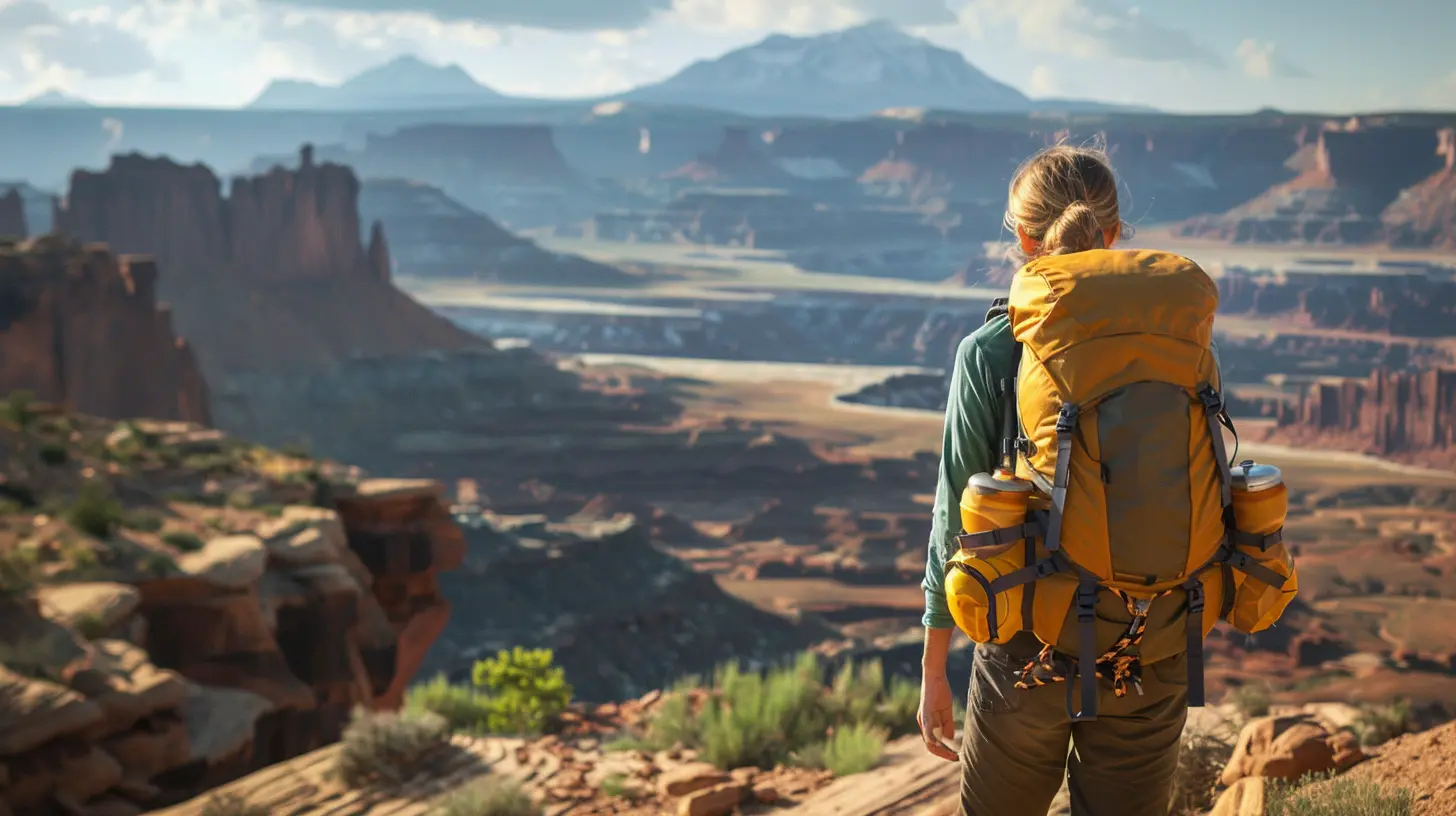
Why Wilderness Navigation Still Matters
You might be thinking, “Why should I care about wilderness navigation when I’ve got Google Maps in my pocket?” Here’s the thing: technology can fail. Batteries die, signals vanish, and devices get damaged. Nature? It doesn’t care if your phone is at 2%.Wilderness navigation is more than just a survival skill—it’s a confidence booster. It transforms you from a passive traveler into an active adventurer. When you understand the land, you're not just visiting nature—you’re becoming one with it.
Back in the Day: How Our Ancestors Navigated
Long before GPS and road signs, people wandered vast landscapes using only their senses, instincts, and a few clever tools. Indigenous tribes, early explorers, and even pirates knew how to read the stars, track the sun, and follow animal paths. They listened to the wind, studied the terrain, and moved with purpose.They didn’t have satellite data or traffic updates. They had knowledge, patience, and the kind of intuition that’s built from experience.
Fast forward to today—most of us can’t even find our car in a parking lot without hitting the panic button.
The Tools of the Trade
Let’s talk gear. Before you sprint into the woods with just your enthusiasm, you’ll need a few essentials.1. Map and Compass
These are the bread and butter of old-school navigation. A topographic map shows the lay of the land—hills, valleys, rivers, and trails. A compass helps you orient yourself to the north and figure out directions.Not sure how to use them together? Don’t sweat it. It’s a skill anyone can learn with some practice (and we’ll get to that).
2. Altimeter
An altimeter tells you your elevation. Pair this with a map, and you can pinpoint your location based on contour lines. No satellites required!3. Watch and Sun
Believe it or not, your analog watch can help you find direction using the sun. Sounds like black magic? It’s not. If you're in the Northern Hemisphere, point the hour hand at the sun, and halfway between that and 12 o'clock is south. Pretty neat, huh?4. The Sky Above
Stars are nature’s GPS. Polaris, the North Star, has guided travelers for centuries. The Big Dipper, Orion’s Belt, and other constellations can help you find your bearings—once you know what to look for.
Reading Nature Like a Map
Nature is full of clues. If you learn to notice them, the wilderness starts making a lot more sense.Animal Trails
Animals follow the path of least resistance. So do humans! A faint trail winding through the brush? It’s probably been used for years.Tree Growth and Moss
Ever heard that moss only grows on the north side of trees? That’s not entirely true—but it might lean that way, depending on moisture levels and shade. It’s one of those tricks that works sometimes, so it’s good to combine it with other signs.Water Flow
Rivers and streams always flow downhill. If you’re lost and find water, follow it. It could lead to a larger body of water, which often means civilization.Mastering Map Reading
Staring at a topographic map for the first time can feel like trying to read hieroglyphics. But once the pieces click, it’s like unlocking a secret code.Understanding Contour Lines
These wavy lines show elevation. If lines are close together, the terrain is steep. Far apart? It’s flat. A circle of lines usually means a hill or mountain. Get comfortable with these, and you’ll know what to expect before you even start hiking.Finding Landmarks
Mountains, rivers, lakes, and roads—they all show up on a topo map. Use these to triangulate your position and plan your route.Orienting the Map
Use your compass. Align the map so that north on the map points to true north. Now, what you see on the paper matches what you see in real life.The Compass Isn’t Just a Fancy Necklace
Taking a Bearing
A bearing is just a direction. Say you want to hike to a mountain peak. Point your compass at it, note the degrees, and walk in that direction. It’s like setting a course and sticking to it.Following a Bearing
Once you’ve taken a bearing, use landmarks to guide you. Pick a tree or rock in that direction and walk to it. Then pick another. Rinse and repeat. Way easier than staring at a needle every five seconds.How to Practice Wilderness Navigation (Without Getting Lost)
You don’t have to fly to Alaska to build your skills. Start small and safe.Local Trails
Head to a nearby park or hiking trail. Bring a map and compass and practice identifying landmarks, noting elevation changes, and checking directions.Orienteering Courses
Yep, those are real, and they’re a blast! Orienteering is essentially navigation as a sport. You get a map, a compass, and a goal—find your way there using only those tools.Map-Walks
Take a regular walk around your neighborhood or a trail, but use a map and compass to guide you. Focus on orienting your map, identifying features, and plotting your location.Common Mistakes (and How to Dodge Them)
Even experienced hikers mess up sometimes. But hey, the best adventurers are the ones who learn from their missteps.Overreliance on Tech
We’re not saying ditch your GPS, but don’t depend on it blindly. Combine it with traditional methods for extra safety and confidence.Not Practicing
This is a skill, folks. Like riding a bike or baking sourdough, it takes reps. Make navigation part of your outdoor routine.Ignoring Weather
Fog, storms, and even tree cover can mess with your navigation. Always be aware of current and forecasted conditions.Skipping Checkpoints
Always know where you are on the map. Mark regular checkpoints so if you get turned around, you can backtrack confidently.The Emotional Side of Wilderness Navigation
It’s not just about direction. Learning to navigate taps into something primal. It gives you a sense of self-reliance and resilience. You start to trust your judgment. You feel… grounded.There’s something uniquely satisfying about finding your way using your brain and your senses instead of a chirping app. It’s almost meditative, like solving a puzzle where the stakes are real—but so are the rewards.
Passing Down the Skill
Don’t let this be a dying art. Teach your kids. Share it with friends. Go on group hikes and have someone navigate every day. The more we practice together, the less likely this tradition fades into obscurity.Wilderness navigation is more than a backup plan—it’s a doorway to deeper adventure, sharper awareness, and a stronger connection with nature. It reminds us we’re not just tourists in the wild. We’re part of it.
Final Thoughts
The wild doesn’t come with signposts or turn-by-turn directions. But that doesn’t mean it’s unknowable. You just need the right mindset, a few solid tools, and a willingness to learn. Rediscovering the lost art of wilderness navigation won’t just help you get from point A to B—it’ll change the way you experience the world.So next time you lace up those boots and head into the forest, challenge yourself. Leave the GPS in your pack, pull out that compass, and follow the trail your ancestors once walked. Trust me—you won’t just find your way. You’ll find a piece of yourself that was waiting to be remembered.
all images in this post were generated using AI tools
Category:
Backcountry TravelAuthor:

Kelly Hall
Discussion
rate this article
2 comments
Benjamin Erickson
What a fascinating exploration of wilderness navigation! It’s incredible how reconnecting with traditional skills can enhance our outdoor experiences. I'm eager to learn more about techniques and tips for navigating without modern tools. Rediscovering these age-old practices could truly transform the way we interact with nature!
December 30, 2025 at 5:46 PM
Kelly Hall
Thank you for your insightful comment! I’m glad you found the exploration fascinating. Stay tuned for more tips and techniques on traditional navigation!
Zorion Bennett
Reviving wilderness navigation reconnects us with nature's essentials.
December 23, 2025 at 4:01 PM
Kelly Hall
Absolutely! Wilderness navigation fosters a deep connection with nature, reminding us of our roots and the skills that enhance our outdoor experiences.